


Managing travel for construction crews involves more than reserving hotel rooms. Project managers must coordinate accommodation, transportation, schedule changes, and travel expenses while ensuring workers can reach their assigned job sites. Construction travel management provides a structured approach to planning, booking, monitoring, and adjusting workforce travel arrangements. It helps construction companies manage crew accommodation, coordinate schedules, and maintain better visibility over project-related travel expenses.
What Is Construction Travel Management?
Organizing and overseeing business travel requirements for employees working on construction projects involves several responsibilities. Efficient construction travel management involves arranging accommodation, coordinating transportation, managing reservations, tracking expenses, and responding to schedule changes.
Unlike traditional corporate travel, construction projects often require accommodation for multiple workers over extended periods. Teams may also move between job sites, work rotating shifts, or need lodging near industrial and remote locations.
An effective travel management system connects these activities through a coordinated process, helping administrators maintain accurate records and communicate arrangements to workers.
How Does Construction Travel Management Work?
The process typically follows several stages, beginning with workforce planning and continuing through booking, expense monitoring, and travel adjustments.
1. Identify Workforce Travel Requirements
Before arranging accommodation, project coordinators determine how many employees need to travel, where they will work, and how long they are expected to remain on-site.
Important considerations include crew size, project duration, transportation requirements, shift schedules, and accommodation preferences.
Collecting accurate information early reduces administrative confusion and helps teams select suitable lodging options.
2. Search for Suitable Crew Accommodation
Once travel requirements are established, administrators compare accommodation options near the project location.
Factors such as distance from the job site, parking availability, laundry facilities, kitchen access, and flexible check-in arrangements can influence the selection.
For projects involving extended stays, suitable amenities may help employees maintain comfortable daily routines.
3. Coordinate Group Reservations
Organizing accommodation for several employees requires careful coordination, especially when managing construction crews working across Calgary and surrounding project locations.
Instead of making individual reservations, companies can use construction industry travel management software to organize group bookings, assign rooms, and maintain reservation information. LodgeLink offers construction-focused booking capabilities, including crew roster uploads, group reservations, and accommodation filters suited to job-site requirements.
4. Manage Schedule Changes
Construction timelines can change because of weather conditions, equipment availability, material deliveries, or project delays.
Travel coordinators may need to extend hotel stays, modify reservation dates, or arrange accommodation for additional workers.
Centralized booking tools can simplify these changes by keeping reservation information accessible to authorized team members.
5. Monitor Travel Expenses
After reservations are confirmed, administrators track accommodation charges, transportation costs, and other approved expenses.
Accurate records help finance teams allocate spending to individual projects and review whether travel arrangements remain within established budgets.
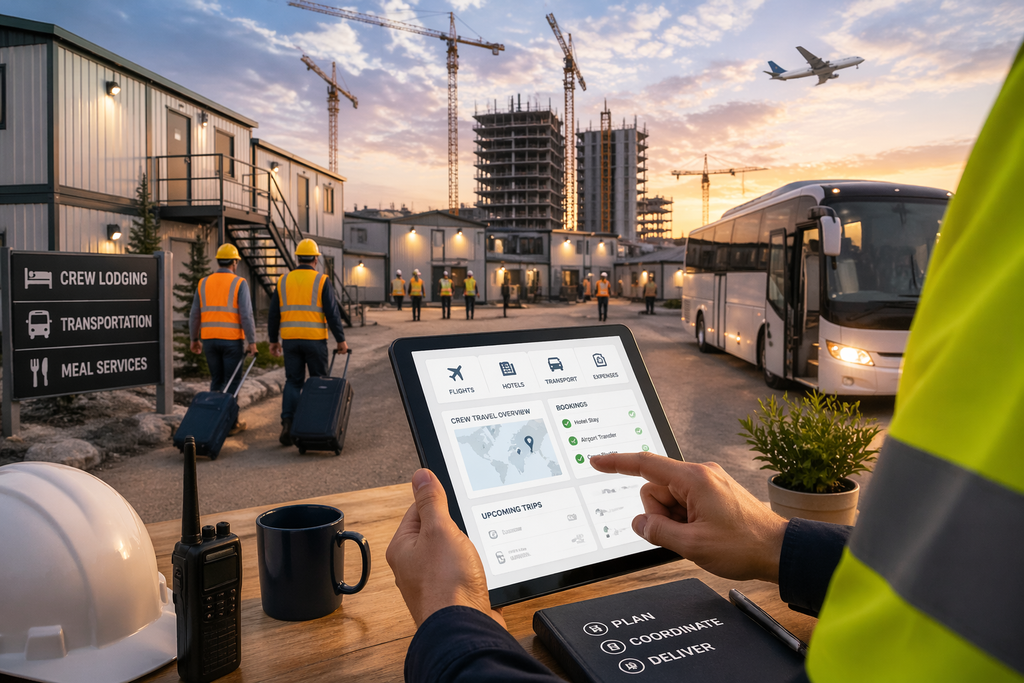
What Are the Main Components of Construction Crew Travel Planning?
A coordinated travel program involves several operational activities that support workforce movement and accommodation.
Crew Accommodation Management
Accommodation planning ensures employees have access to suitable lodging throughout their assignments. Well-organized crew travel management considers room availability, travel distance, employee schedules, and extended-stay requirements.
Keeping accommodation records organized also helps coordinators respond when workers move between project locations.
Transportation Coordination
Employees may require rental vehicles, shared transportation, or other travel arrangements to reach construction sites.
Coordinating transportation alongside lodging can reduce scheduling conflicts and improve communication between project teams.
Centralized Booking and Administration
Depending on the platform, administrators may be able to review booking details, update accommodation assignments, and access travel records without relying on multiple spreadsheets. Modern travel booking software allows organizations to manage reservations through a shared digital system.
Expense Reporting and Financial Oversight
Travel-related spending can become difficult to monitor when reservations are distributed across different vendors. Integrating construction industry travel management software with centralized reporting helps finance teams better understand accommodation costs, booking patterns, and project-related expenses.
What Are the Benefits of Construction Travel Management?
An organized travel process can improve administrative efficiency while supporting better coordination between project managers and traveling employees.
Reduced Administrative Workload
Managing group accommodation manually often requires repeated phone calls, reservation confirmations, and spreadsheet updates.
Centralizing booking information reduces duplicate administrative tasks and lets coordinators focus on project operations.
Improved Cost Visibility
A centralized workforce travel management system helps companies monitor expenses by project, department, or travel period. This visibility supports budget planning, cost comparisons, and more accurate financial reporting.
Greater Flexibility During Project Changes
Construction project schedules can change unexpectedly due to weather, material availability, and operational requirements.
Flexible reservation arrangements can make it easier to accommodate project extensions, changing workforce numbers, and revised travel dates.
However, modification and cancellation conditions depend on the accommodation provider and applicable booking terms.
Better Communication With Traveling Employees
Clear reservation information helps workers understand where they will stay, when they should arrive, and whom to contact if arrangements change.
Consistent communication reduces uncertainty and supports smoother workforce transitions.
How Can Construction Companies Select the Right Travel Management Solution?
Choosing an appropriate system requires understanding both operational requirements and available platform capabilities.
Evaluate Booking Flexibility
Review whether the platform supports group reservations, extended stays, room reassignment, and booking modifications.
Check Accommodation Search Features
Look for options to search by project location and filter properties based on practical requirements, including vehicle parking and extended-stay amenities.
Review Reporting Capabilities
A useful system should provide accessible reservation records and support expense tracking across different projects.
Consider Support Availability
Construction teams may travel outside standard office hours. Reliable customer support can be important when unexpected changes occur.
Before adopting any platform, companies should also review pricing, cancellation conditions, data security practices, and relevant service limitations.
How Can Digital Tools Support Better Construction Travel Planning?
Digital platforms connect accommodation searches, reservations, workforce scheduling, and expense records within a more organized workflow.
Rather than maintaining separate records for each activity, administrators can access relevant information through a central system. For example, LodgeLink provides features for construction crew bookings, accommodation searches near job sites, reservation adjustments, and project-based spending reports.
These capabilities can help organizations coordinate traveling teams while reducing manual work associated with large-scale accommodation arrangements.

Frequently Asked Questions
What Is the Main Purpose of Managing Construction Crew Travel?
The primary purpose is to coordinate accommodation, transportation, and related expenses for employees working away from their usual locations. Organized planning helps ensure workers receive accurate travel information and suitable arrangements for their assignments.
How Can Construction Companies Reduce Accommodation Expenses?
Companies can compare available properties, plan bookings ahead when possible, review extended-stay options, and monitor spending by project. Cost comparisons should consider the total expense, including transportation between accommodation and the job site.
Can Travel Management Systems Handle Multiple Construction Projects?
Many platforms support reservations across different projects or job locations. Features may include project-specific booking records, cost allocations, and centralized reporting. Available capabilities depend on the provider.
What Happens When Construction Projects Experience Delays?
Travel coordinators may need to extend accommodation, change reservation dates, or adjust transportation arrangements. Digital booking systems can help organize these updates, although additional charges or cancellation restrictions may apply.
Why Is Location Important When Booking Construction Crew Accommodation?
Accommodation location affects daily travel time, transportation expenses, and access to project sites. Choosing suitable lodging near the work location can reduce unnecessary commuting and support more predictable schedules.
What Should Companies Consider Before Using a Digital Booking Platform?
Companies should examine accommodation availability, booking flexibility, reporting functions, customer support, pricing transparency, and security measures. Selecting a platform that matches actual workforce requirements is more important than choosing one based only on its advertised features.
Conclusion
Effective construction travel planning requires coordination between workforce scheduling, accommodation arrangements, transportation, and financial oversight.
A structured approach helps construction companies manage changing project requirements, maintain accurate travel records, and support employees working away from their usual locations.
By combining practical travel policies with suitable digital tools, organizations can reduce administrative complexity, strengthen expense visibility, and create a more consistent booking process across multiple projects.
Need reliable accommodation solutions for construction crews? Find LodgeLink on Google Maps and get directions to explore workforce lodging and travel management options for upcoming projects.